Google Cloud Data Engineer Training in Hyderabad: Learn Cloud Data Platforms and Build Practical Skills
Data is at the center of almost every modern digital business.
An e-commerce platform needs data to understand customer purchases. A financial organization needs data to monitor transactions. Healthcare applications depend on structured and reliable information. Streaming platforms analyze user activity to improve recommendations.
Behind these use cases are data systems that collect information from multiple sources, process it and make it available for analysis.
This has created growing interest in cloud data engineering.
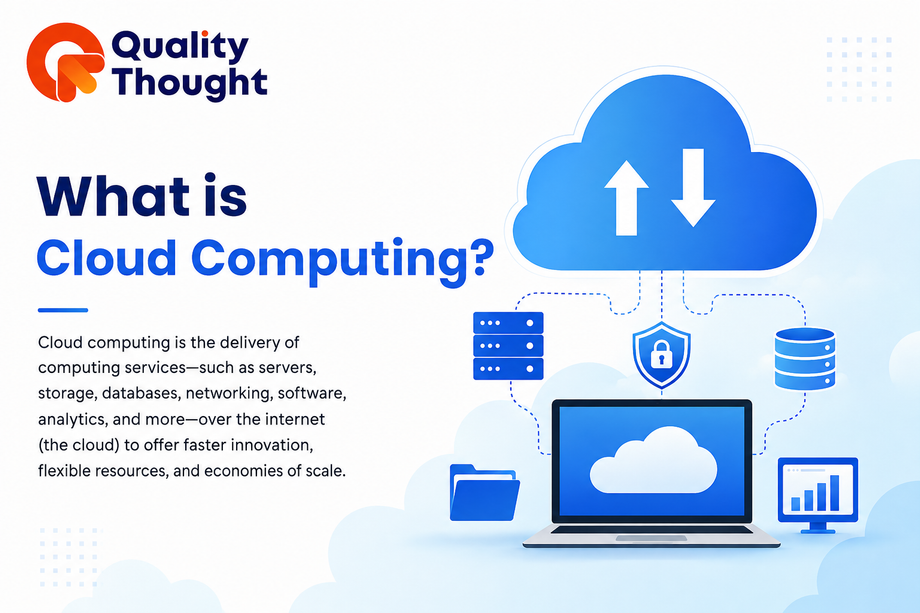
Google Cloud offers technologies that support different stages of the data lifecycle, including storage, processing, analytics and automation. Learning how these services work together can help aspiring data professionals understand modern data platform architecture.
For people in Hyderabad looking to develop these skills, Google Cloud Data Engineer Training in Hyderabad can provide a structured starting point.
What Does a Google Cloud Data Engineer Do?
A Google Cloud Data Engineer focuses on designing and managing systems that process organizational data.
The work can involve several stages.
Data Collection
Information may come from applications, databases, APIs, files, sensors or business systems.
Data Ingestion
The information needs to be moved into an appropriate cloud environment.
Data Processing
Raw data may contain missing values, inconsistent formats or unnecessary information. Processing transforms it into a usable form.
Data Storage
Processed information needs to be stored in systems appropriate for operational or analytical workloads.
Data Analysis
Once prepared, the data can be queried and used for reporting, dashboards, business intelligence or machine learning.
Monitoring and Maintenance
Data systems must be monitored so that failures, performance issues and unexpected behavior can be identified.
This makes data engineering a combination of cloud computing, programming, databases, analytics and system design.
Understanding the Google Cloud Data Lifecycle
One useful way to understand data engineering is to look at the complete data lifecycle.
A simplified workflow is:
Generate → Collect → Ingest → Process → Store → Analyze → Monitor
Consider an online retail company.
Customers generate information whenever they:
- Search for products
- Add products to a cart
- Place orders
- Make payments
- Review products
- Interact with promotional campaigns
A data engineering system can collect this information and transform it into structured datasets.
Business teams can then use those datasets to answer questions such as:
- Which products are selling most?
- Which locations generate the most revenue?
- What are the busiest sales periods?
- Which customers are returning?
- How are sales changing over time?
The data engineer builds the technical foundation that makes this analysis possible.
Key Google Cloud Technologies for Data Engineers
A comprehensive Google Cloud Data Engineer program should introduce learners to multiple services and concepts.
BigQuery
BigQuery is a major analytical data warehouse service within Google Cloud.
It allows organizations to work with large datasets using SQL.
Learners can practice:
- Dataset creation
- Table management
- Data loading
- SQL queries
- Aggregations
- Joins
- Partitioning
- Clustering
- Query optimization
For aspiring data engineers, BigQuery provides an opportunity to understand how cloud-based analytical data warehouses differ from traditional database environments.
Cloud Storage
Google Cloud Storage can provide scalable object storage for files and datasets.
A data engineering architecture may use cloud storage for:
- Raw data
- Backup files
- CSV files
- JSON files
- Log files
- Intermediate datasets
- Data lake environments
Understanding storage organization, access control and lifecycle management is therefore an important part of cloud data engineering.
Dataflow
Dataflow is designed for processing data pipelines.
It supports both batch and streaming workloads.
For learners, the important concepts include:
- Pipeline design
- Transformations
- Batch processing
- Streaming processing
- Apache Beam
- Data ingestion
- Pipeline monitoring
Instead of learning Dataflow as an isolated technology, students should understand where a processing service fits into an overall data architecture.
Pub/Sub and Event-Based Data
Modern applications frequently generate events continuously.
For example:
User Login → Application Event → Message → Processing Pipeline → Data Warehouse
Google Cloud Pub/Sub can be used for messaging and event-driven architectures.
Understanding event-based data helps learners move beyond traditional scheduled ETL jobs and explore modern streaming architectures.
SQL Skills for Google Cloud Data Engineering
SQL is one of the most valuable skills for data professionals.
A learner should understand both basic and advanced SQL.
Basic SQL
- SELECT
- WHERE
- ORDER BY
- GROUP BY
- DISTINCT
- Aggregate functions
Intermediate SQL
- INNER JOIN
- LEFT JOIN
- CASE
- Subqueries
- Common table expressions
Advanced SQL
- Window functions
- Analytical calculations
- Complex transformations
- Query optimization
Practicing SQL using realistic datasets is more useful than simply memorizing syntax.
Python and Automation
Python is widely used across data and cloud environments.
For a data engineer, Python can support:
- Data transformation
- Automation
- API interaction
- File processing
- Validation
- Pipeline utilities
- Testing
Training should ideally combine Python concepts with practical data scenarios.
For example, instead of learning Python only through generic programming exercises, students can practice reading a file, validating its contents and preparing the data for a cloud pipeline.
ETL and ELT Concepts
Understanding ETL and ELT is important for anyone entering data engineering.
ETL
ETL stands for:
Extract → Transform → Load
Data is extracted from its source, transformed and then loaded into the target system.
ELT
ELT means:
Extract → Load → Transform
Data is first loaded into a target environment and transformed there.
Cloud platforms have made ELT architectures increasingly practical because scalable analytical platforms can perform transformations on large datasets.
The choice between ETL and ELT depends on factors such as architecture, data volume, governance requirements and business needs.
Data Quality in Cloud Engineering
A pipeline can successfully move data and still produce poor results if the data itself is inaccurate.
Data quality can involve checking:
- Missing values
- Duplicate records
- Invalid formats
- Incorrect timestamps
- Unexpected values
- Referential relationships
- Schema changes
For example, suppose a sales dataset contains:
|
Order ID |
Product |
Quantity |
|
1001 |
Laptop |
2 |
|
1002 |
Monitor |
-5 |
|
1003 |
Keyboard |
3 |
A negative quantity might indicate an invalid record or a return transaction.
Data engineers need to understand business rules and build appropriate validation into data workflows.
Data Modeling
Data modeling helps organize information so it can be efficiently stored and analyzed.
Important concepts can include:
- Tables
- Relationships
- Primary keys
- Foreign keys
- Fact tables
- Dimension tables
- Normalization
- Denormalization
- Star schemas
For analytical systems, understanding dimensional modeling can be particularly useful.
A simple retail model might include:
Fact Sales
- Sale ID
- Product ID
- Customer ID
- Date ID
- Revenue
Dimension Product
- Product ID
- Product Name
- Category
- Brand
Dimension Customer
- Customer ID
- Location
- Customer Type
This structure allows analysts to ask meaningful business questions using SQL.
Batch vs Streaming: Which Should You Learn?
Both approaches are important.
Batch Workloads
Suitable when data does not need to be processed immediately.
Examples:
- Daily sales reports
- Monthly financial analysis
- Nightly data synchronization
Streaming Workloads
Useful when information needs to be processed continuously or with low latency.
Examples:
- Application events
- Fraud detection
- Real-time monitoring
- IoT data
A good cloud data engineer should understand how business requirements influence architecture decisions.
Building an End-to-End Google Cloud Data Project
Hands-on projects can bring multiple concepts together.
Consider a Retail Analytics Pipeline.
Step 1: Collect Data
Start with customer, product and transaction files.
Step 2: Store Raw Data
Place the original files into cloud storage.
Step 3: Validate Data
Check for missing fields, duplicates and invalid values.
Step 4: Transform Data
Clean and standardize the datasets.
Step 5: Load Analytical Data
Move the prepared information into BigQuery.
Step 6: Create Analytical Queries
Write SQL queries to calculate:
- Total sales
- Product performance
- Regional performance
- Monthly revenue
- Customer activity
Step 7: Create Reports
The resulting datasets can support dashboards and business reporting.
This type of project demonstrates how several cloud data concepts connect together.
Why Hands-On Training Matters
Cloud data engineering involves technical decision-making.
A learner may understand what BigQuery is but still struggle to answer:
When should I use it?
Similarly, knowing what a pipeline is does not automatically mean knowing how to troubleshoot one.
Hands-on exercises help learners experience:
- Configuration problems
- Data format issues
- Permission errors
- Query performance challenges
- Pipeline failures
- Schema mismatches
Solving these issues can strengthen practical problem-solving skills.
Who Can Learn Google Cloud Data Engineering?
Google Cloud Data Engineer Training can be considered by:
Computer Science Students
Students can combine their academic knowledge with cloud technologies.
Fresh Graduates
Graduates can build a foundation in cloud, SQL, Python and data engineering.
Software Developers
Developers can expand toward data platforms and cloud-based architectures.
Database Professionals
Database professionals can transition their existing knowledge into cloud data environments.
Data Analysts
Analysts with SQL experience can explore pipeline development and data platform concepts.
IT Professionals
Professionals from related technical domains can use cloud data engineering as a specialization.
How to Build a Strong Learning Strategy
Instead of attempting to learn every Google Cloud service simultaneously, use a progressive approach.
Stage 1: Foundations
Learn:
- Cloud computing
- Databases
- SQL
- Basic programming
Stage 2: Google Cloud
Understand:
- Projects
- IAM
- Cloud Storage
- Core cloud concepts
Stage 3: Data Services
Focus on:
- BigQuery
- Dataflow
- Pub/Sub
- Data processing concepts
Stage 4: Architecture
Study:
- ETL
- ELT
- Data lakes
- Data warehouses
- Batch processing
- Streaming
Stage 5: Projects
Build complete data workflows.
Stage 6: Certification Preparation
Once the fundamentals and practical skills are established, review the official Professional Data Engineer certification objectives.
Google Cloud Professional Data Engineer Certification
Google Cloud's current professional certification for this field is the Professional Data Engineer certification.
The official certification evaluates areas including:
- Designing data processing systems
- Ingesting and processing data
- Storing data
- Preparing and using data for analysis
- Maintaining and automating data workloads
Google Cloud's official certification information should be checked before registration because exam policies, pricing and requirements can change.
Certification preparation is most effective when combined with practical cloud experience rather than relying exclusively on memorization.
Google Cloud Data Engineer Training in Hyderabad with Quality Thought
For learners looking for Google Cloud Data Engineer Training in Hyderabad, Quality Thought IT Training Institute is one training option to explore.
Quality Thought IT Training Institute
The institute provides IT-focused training for learners interested in developing skills across modern technology domains.
For Google Cloud-related training information, learners can explore:
Google Cloud Platform Training
When comparing training institutes, prospective learners should consider practical sessions, syllabus coverage, instructor experience, projects, learning support and certification preparation.
Career Development After Google Cloud Data Engineering Training
Cloud data engineering can connect to several technology career paths.
Potential roles include:
- Google Cloud Data Engineer
- Cloud Data Engineer
- Data Engineer
- ETL Developer
- Data Platform Engineer
- Analytics Engineer
- Big Data Engineer
- Cloud Data Developer
Actual responsibilities differ between organizations, so candidates should compare job descriptions and required skills when planning their career.
A strong portfolio can also help demonstrate practical knowledge.
A portfolio might include:
- GitHub projects
- Data pipeline diagrams
- SQL examples
- Cloud architecture diagrams
- Project documentation
- Data quality checks
- Performance improvements
How to Prepare for Data Engineering Interviews
Technical preparation should cover more than certification topics.
SQL Questions
Practice joins, aggregations, subqueries and window functions.
Python Questions
Review programming fundamentals and data-processing tasks.
Cloud Questions
Understand storage, IAM, data processing and cloud architecture.
Scenario Questions
Be prepared to explain how you would design a pipeline for a particular business requirement.
Troubleshooting Questions
Learn how to approach:
- Failed pipelines
- Missing data
- Duplicate records
- Slow queries
- Permission problems
- Schema changes
The ability to explain your reasoning is often as important as knowing individual commands.
Frequently Asked Questions
What is Google Cloud Data Engineer Training?
It is training designed to teach learners how to work with data platforms, pipelines, storage, processing and analytics technologies within Google Cloud.
Is Google Cloud Data Engineering difficult?
It can be challenging because it combines several areas, including SQL, programming, cloud computing, databases and data architecture. A structured learning path can make it easier to progress.
Is SQL required for Google Cloud Data Engineering?
Yes. SQL is an important skill for querying and transforming analytical data.
Should I learn Python before GCP Data Engineering?
Basic Python knowledge is helpful, particularly for automation and data processing.
Is BigQuery important?
Yes. BigQuery is a major Google Cloud service for analytical workloads and is an important technology for learners exploring Google Cloud data engineering.
What is the difference between a Data Engineer and Data Analyst?
A data engineer generally focuses on building and maintaining data infrastructure and pipelines, while a data analyst typically focuses more on querying data, identifying patterns and communicating insights. There can be overlap between the roles.
Is certification enough to become a Data Engineer?
No. Certification can demonstrate knowledge of a platform, but practical skills, projects, problem-solving ability and relevant experience are also important.
Can freshers learn Google Cloud Data Engineering?
Yes. Freshers can begin with SQL, Python, cloud fundamentals and gradually progress toward data engineering projects.
Final Thoughts
The modern data engineer works at the intersection of data, cloud infrastructure, programming and analytics.
Google Cloud provides a range of services that can support the data lifecycle, from storage and ingestion to processing and analytical workloads.
For learners in Hyderabad, Google Cloud Data Engineer Training in Hyderabad can offer a structured way to explore these technologies and develop practical capabilities.
However, the strongest results come from active learning.
Practice SQL. Build pipelines. Work with datasets. Troubleshoot errors. Understand architecture. Document your projects. Then use certification preparation as an additional way to validate your knowledge.
That approach can help transform cloud data engineering from a collection of tools into a practical professional skill set.
Visit Our Course Page link : https://qualitythought.in/google-cloud-platform-training/
Visit Our Website Page link : https://qualitythought.in/
Visit Our GMB Page link : GCP Training Institute in Hyderabad
Contact Us : 091211 88426
Mail Id : info@qualitythought.in
Comments
Post a Comment